The breed
The Australian Cobberdog: origins, temperament and characteristics of the breed
The Australian Cobberdog is a breed in development, registered with the Master Dog Breeders & Associates (MDBA). It descends from the Labradoodle and from a breeding programme sustained over many generations with the aim of making certain traits of temperament, coat and build more consistent. "Cobber" is Australian slang for "mate". Australian Cobberdog House is an MDBA member, breeder number 45027, and on this page we describe the breed as we have come to know it in more than ten years of working with it.
Where it comes from
What a Cobberdog is and where it comes from
The Australian Cobberdog developed from a multigenerational Labradoodle background. Its breeding framework uses documented ancestry and a standard rather than identifying dogs by coat appearance alone.
The MDBA registration framework records breeding lines and sets requirements for registration. A pedigree can help trace ancestry; it does not guarantee the health, temperament or coat of an individual dog.
Our breeding dogs come from MDBA lines in Australia, Canada and the United States. Each undergoes H639 testing before joining the breeding programme. The health and genetics page explains how we use those results alongside veterinary and pedigree information.
The names
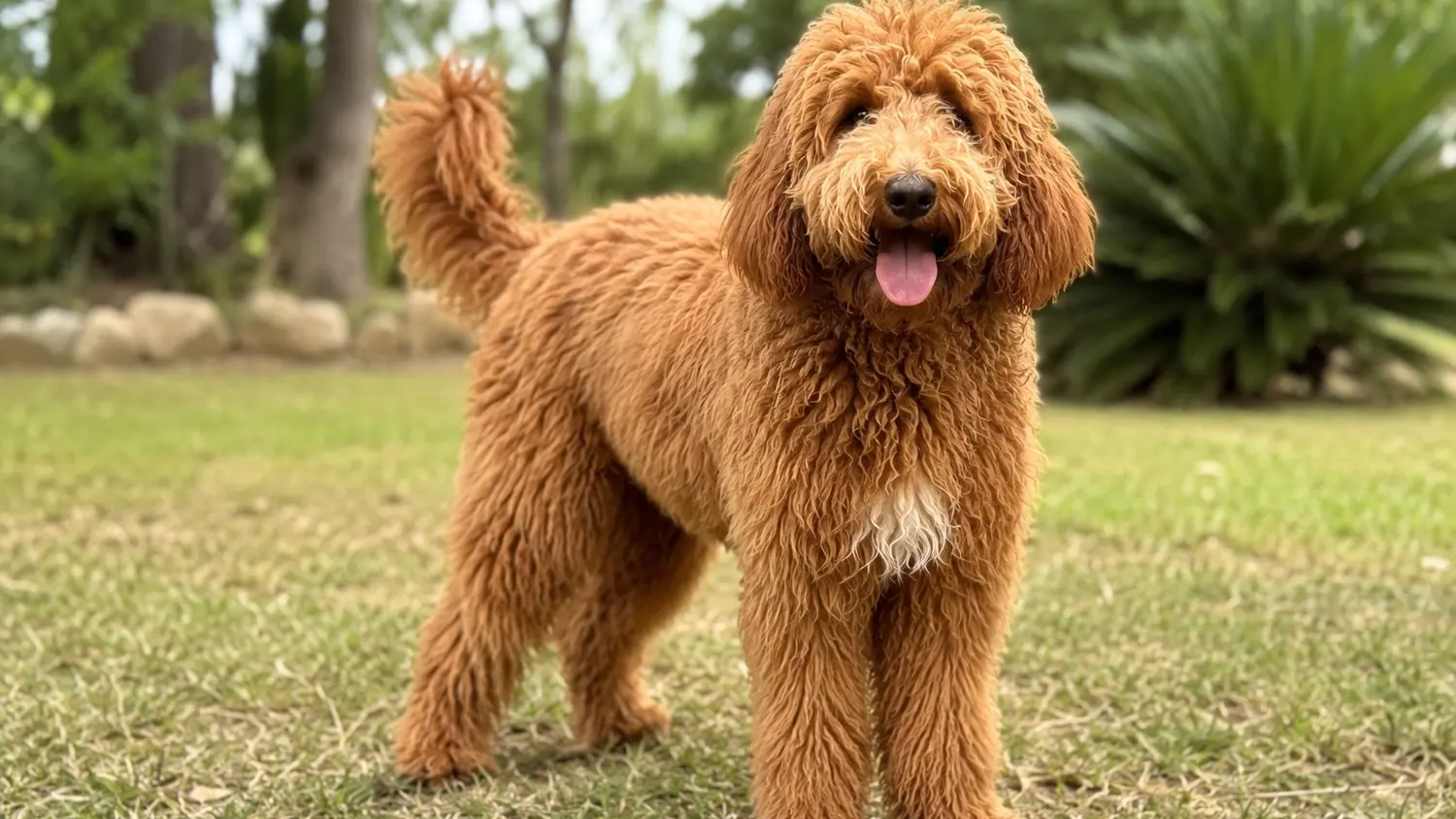
Labradoodle, Australian Labradoodle, Goldendoodle, Cobberdog: each name in its place
These names describe related breeding histories or different crosses, but they are not interchangeable registration labels. Ask which organisation records the line and which documents accompany the puppy.
- Labradoodle Labrador × Poodle
- A cross between two breeds, with nothing more implied. It may be a first generation (F1) or the offspring of other Labradoodles (F2 and beyond); the word on its own says nothing about the coat and temperament that will come out of it.
- Goldendoodle Golden Retriever × Poodle
- A Golden Retriever and Poodle cross. This is a different name and ancestry description from a Labradoodle; it does not, by itself, predict an individual dog’s coat, shedding or temperament.
- Australian Labradoodle Multigenerational Labradoodle of Australian lines
- A multigenerational Labradoodle from Australian lines. Associations such as the ALAA publish their own breed standards and registration requirements. Check the framework used by the breeder you are considering.
- Australian Cobberdog Breed in development registered with the MDBA
- A dog recorded within the MDBA’s Australian Cobberdog framework, with its own standard and documented breeding lines. Our programme works within that framework; it should not be treated as proof of an individual puppy’s future health or suitability.
For a practical guide to comparing registration and breeder documents, read Australian Cobberdog vs Australian Labradoodle.
Cobberdog or Labradoodle
How it differs from a first- or second-generation Labradoodle
The label F1 describes a first-generation Labrador Retriever and Poodle cross; F2 refers to a further generation from that cross. Generation labels provide ancestry information but are not an assessment of a puppy’s health, behaviour or care needs.
The Australian Cobberdog corresponds to a multigenerational breeding programme registered with the MDBA, with documented pedigrees and a defined standard. The aim of that selection is greater consistency between generations in traits such as coat, temperament and build, always with the individual variability every living creature has.
We chose the breed precisely for that framework: traceable lines, genetic information on the breeding dogs and a register that documents each pedigree. More than ten years later we are still breeding within it. The whole story is on the page Our breeding.
The three side by side
| Australian Cobberdog | Australian Labradoodle | Labradoodle F1 / F2 | |
|---|---|---|---|
| Origin | Multigenerational background documented within the MDBA framework | Multigenerational Labradoodle of Australian lines, often with other breeds | Labrador × Poodle, or the offspring of that cross |
| Generations | Many generations of documented selection | Many generations, documented differently by each association | First or second generation |
| Coat | Typically low-shedding; assess the individual coat | Coat goals set by the relevant standard; individual variation | Variable by generation; differences possible within a litter |
| Temperament | Selected generation after generation, with individual variability | Selected, with individual variability | Individual variation; assess the puppy and its upbringing |
| Own register and standard | Yes: breed in development at the MDBA, with standard and stud book | Standards of several associations, no single register | The generation label does not identify a registry |
Use the comparison guide for the questions to ask about the parents, registration and the sale documents.
Temperament
Temperament: assess the individual puppy
The breed’s selection aims include sociability and interest in people. Individual dogs differ in energy, confidence and sensitivity. A breed description is a starting point for discussion, not a promise that a puppy will adapt to any routine.
We observe each puppy before suggesting possible matches. Discuss children, other animals and your daily routine with us, and plan adult supervision of interactions with children. A therapy or assistance project needs individual assessment and specialist involvement; the breed alone does not establish suitability.
Make time for companionship, appropriate activity, rest and ongoing training. Introduce independence gradually and seek professional support if separation causes distress. The socialisation guide explains what begins with us and continues at home.
In detail
Sizes, colours and coat: the three pages on the breed
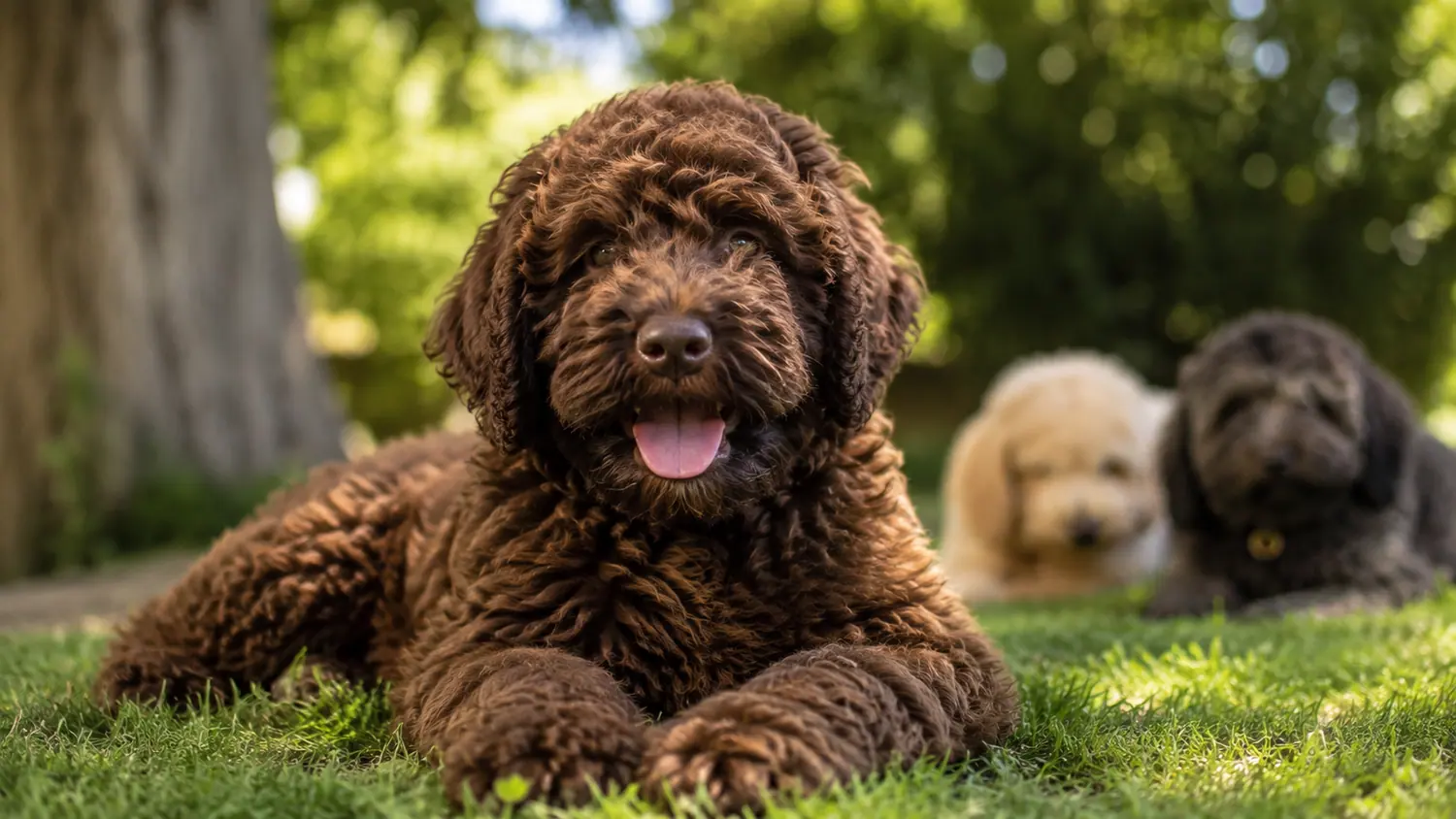
Use these guides to consider size, appearance, coat care and allergy questions separately. Our size labels are practical guides, the site’s images are illustrative, and allergy decisions belong with a qualified specialist.
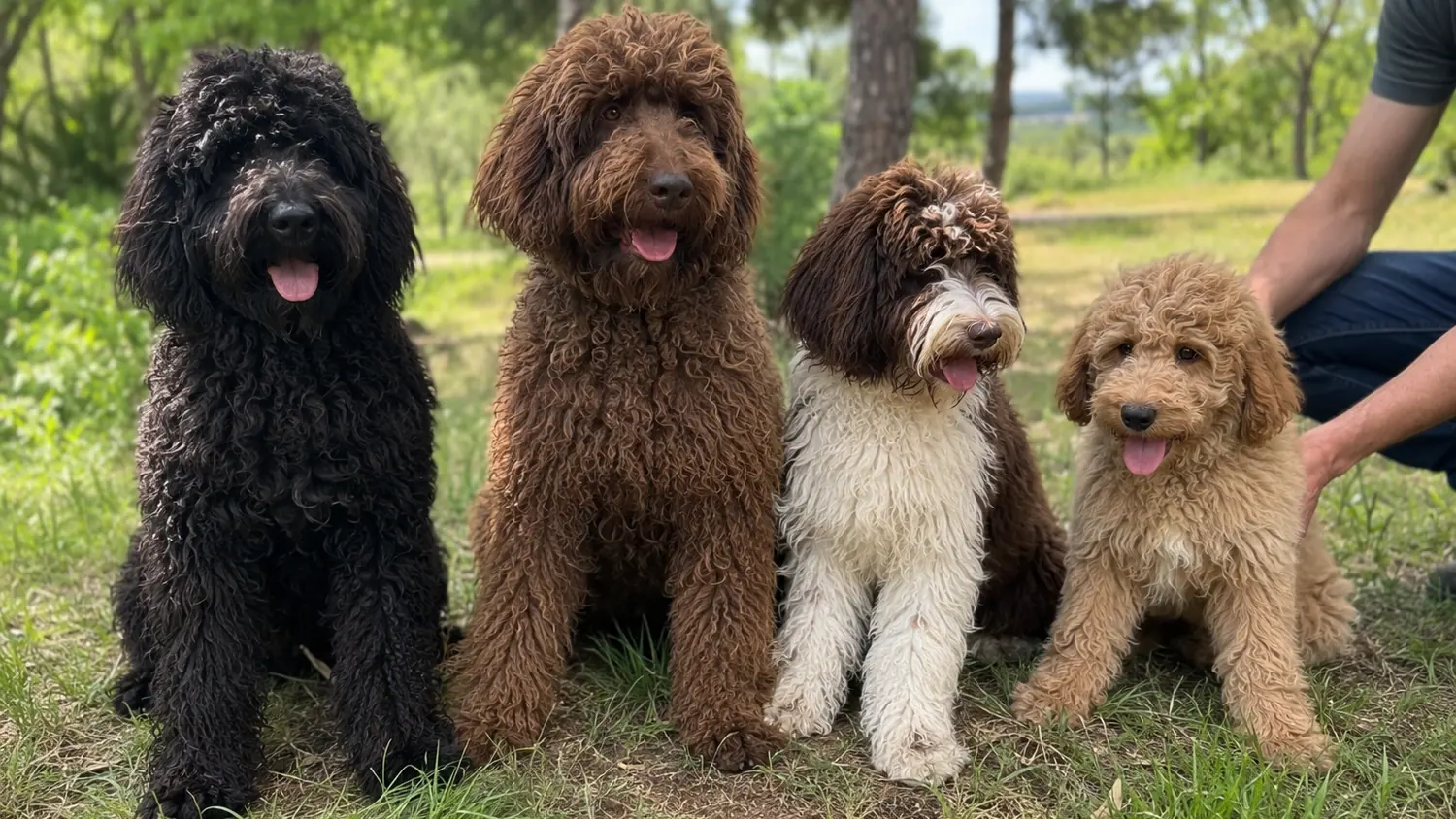
Sizes
Mini, Small, Medium and Large: guide figures, and why we estimate adult size but do not guarantee it.
See the sizes →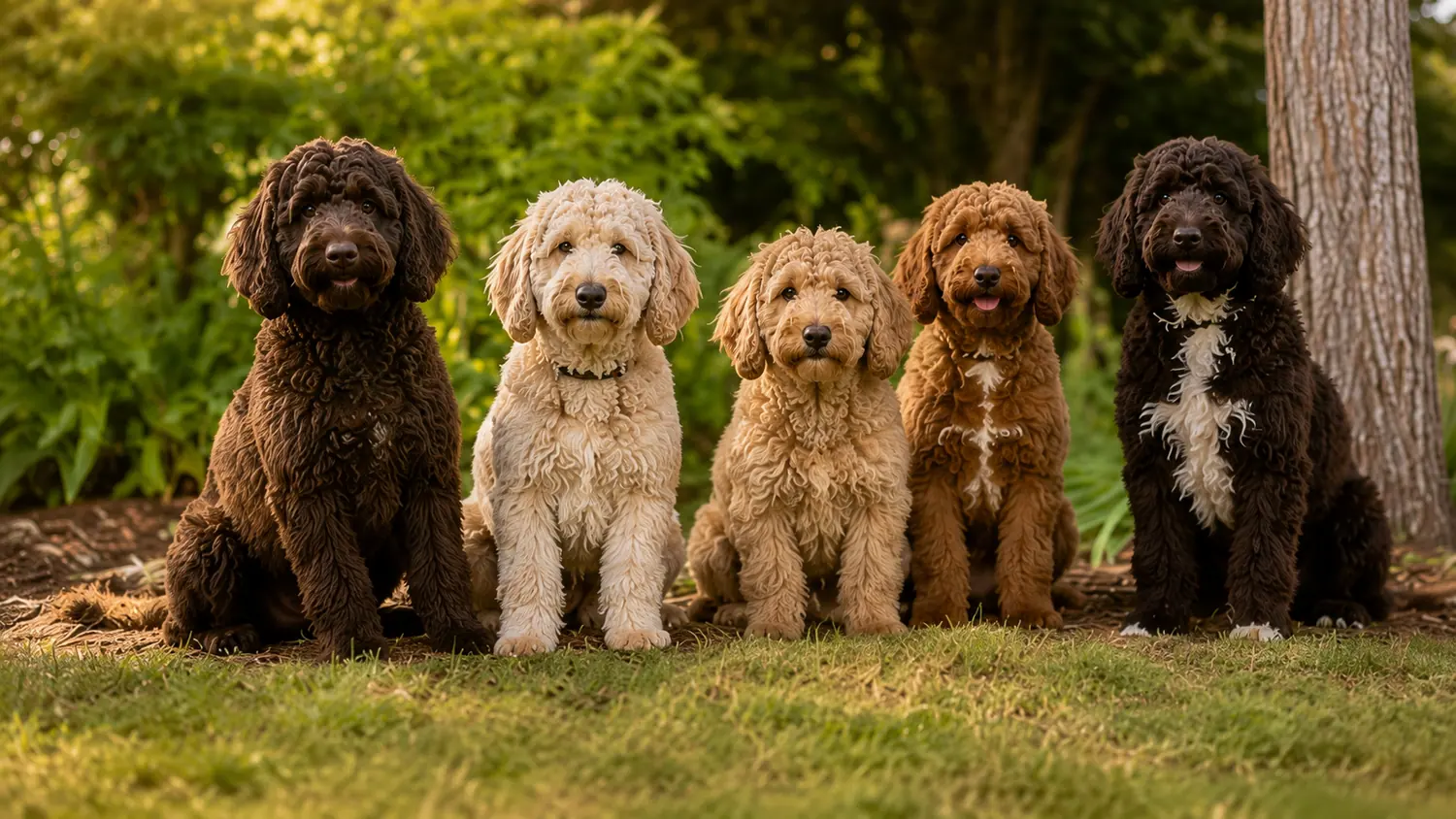
Colours
Black, gold, apricot, red, chocolate and parti: how they arise, how they change and how they affect the price.
See the colours →
Coat and allergies
A low-shedding coat, grooming needs and the allergy questions to discuss with a specialist.
Coat and allergies →The next step
You know the breed. Now meet the dogs
If, having read this, you want to know how a puppy of ours would come to live with you, message us on WhatsApp or read how delivery works. When it is possible, we show you the adults and the litters on a video call.